OCD Awareness: Understanding Obsessions, Compulsions, and Treatment
By MindWell Team · 3/9/2026 · 4 min read
Obsessive-Compulsive Disorder (OCD) is a mental health condition characterised by two core features:
- Obsessions — unwanted, intrusive, and distressing thoughts, images, urges, or doubts
- Compulsions — repetitive behaviours or mental acts performed to reduce the distress caused by obsessions (temporarily)
OCD is significantly misrepresented in popular culture. It is not about being tidy, organised, or having "a thing" about cleanliness. It is a debilitating, sometimes severely disabling condition — ranked by the WHO among the top ten most disabling conditions worldwide. It also responds well to evidence-based treatment.
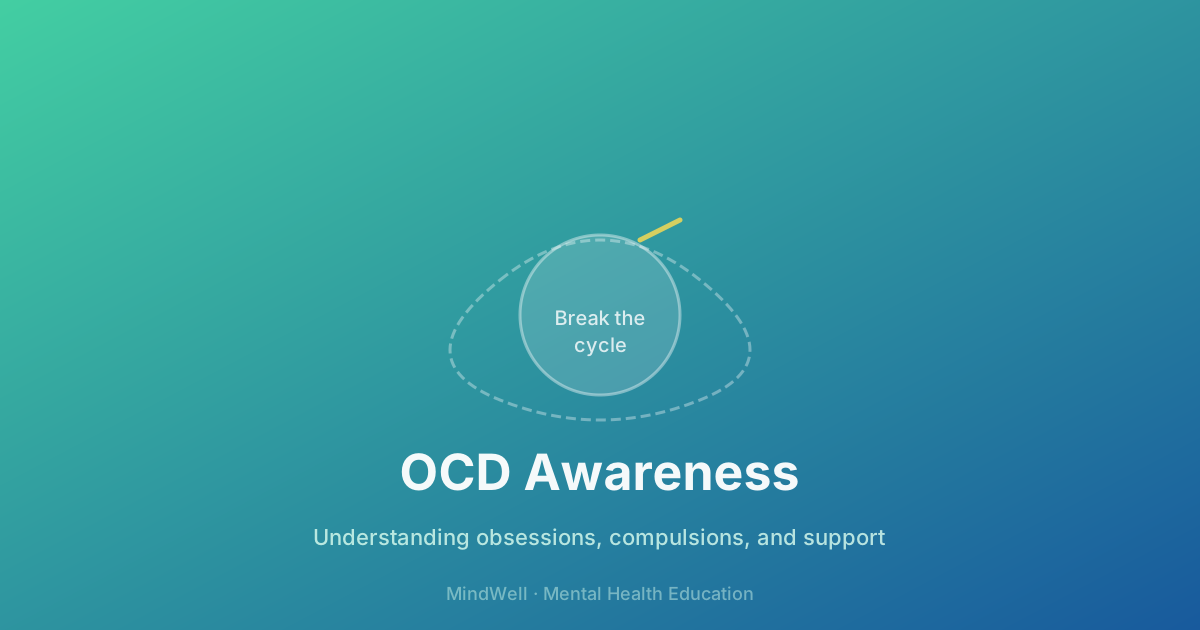
The OCD Cycle
Understanding how OCD maintains itself is crucial:
1. Intrusive thought/image/urge appears (nearly everyone has intrusive thoughts; the difference in OCD is what happens next) 2. The thought is perceived as significant or dangerous ("If I thought about harming someone, that must mean something terrible about me") 3. Anxiety and distress rise 4. Compulsion is performed to neutralise or undo the thought (checking, washing, mental reviewing, reassurance-seeking) 5. Temporary relief — which reinforces the compulsion 6. Obsessions return — typically more frequently, as the cycle is reinforced
The compulsions provide short-term relief but maintain and strengthen the cycle long-term.
Common OCD Subtypes
OCD presents in many different ways — these are not fully separate disorders but different themes:
- Contamination OCD – fears of germs, illness, or contamination; compulsions include excessive washing or cleaning
- Checking OCD – fears of harm (fire, accidents, forgetting to lock doors); compulsions include checking repeatedly
- Harm OCD – distressing intrusive thoughts about harming oneself or others (despite no desire to do so); compulsions include avoidance, mental reviewing, reassurance-seeking
- Symmetry/ordering OCD – distress when things feel "not right" or asymmetrical; compulsions include arranging, repeating
- Pure O (misnomer) – primarily mental obsessions and covert mental compulsions rather than visible behaviours
- Health anxiety/contamination variants involving excessive medical checking
Important: Having intrusive thoughts — even disturbing ones — is universal and does not make someone dangerous. In OCD, the content of intrusive thoughts is ego-dystonic (contrary to the person's values), which is why it causes such distress.
Evidence-Based Treatment
OCD responds well to two main treatments:
Exposure and Response Prevention (ERP)
ERP is considered the gold-standard psychological treatment for OCD, with strong evidence from many clinical trials.It involves: 1. Gradual exposure to feared situations or thoughts (in a planned, supported way) 2. Resisting compulsions (response prevention) — allowing anxiety to naturally reduce through habituation
ERP works by breaking the compulsion-relief cycle and building tolerance to uncertainty. It is challenging but highly effective, with response rates of 60–80% in research settings.
Cognitive Therapy for OCD
Addresses the beliefs that make intrusive thoughts feel meaningful or dangerous — such as inflated responsibility ("If I don't check, something terrible will happen and it will be my fault").Medication
SSRIs (especially at higher doses than used for depression) are first-line medications for OCD, often used in combination with ERP. A psychiatrist should manage this.What Doesn't Help (and Can Worsen OCD)
- Reassurance-seeking from others temporarily relieves anxiety but functions as a compulsion, maintaining the cycle
- Avoidance of triggers reduces anxiety short-term but increases sensitivity long-term
- Thought suppression ("Don't think about it") paradoxically increases intrusive thoughts (the "white bear" phenomenon)
Understanding these patterns helps people engage more effectively with treatment.
OCD and Stigma
People with OCD often feel profound shame about their obsessional content. They may fear what their thoughts "say about them" as a person. It is crucial to understand that the content of obsessions — especially in harm OCD — is completely contrary to the person's actual values and character.
Mental health professionals trained in OCD will not be shocked or alarmed by the content of obsessional thoughts. Disclosure is often the first step toward effective treatment.
Seeking Help
OCD is underdiagnosed — many people suffer for years before receiving correct assessment and treatment. If you recognise the OCD cycle in your experience, please seek assessment from a mental health professional who specialises in OCD or anxiety disorders.
MindWell's psychologists directory can help you find qualified support.
Bangladesh crisis line: Kaan Pete Roi – 01779-554391 (24/7)
Summary
OCD is a serious but highly treatable condition. Understanding the obsession-compulsion cycle, seeking specialist treatment (ERP in particular), and reducing reassurance-seeking and avoidance are the cornerstones of recovery. Shame is the biggest barrier — understanding that OCD content does not reflect character is liberating.
*Disclaimer: This article is educational only. Consult a qualified mental health professional for personalised assessment and treatment.*