Therapy Myths vs Facts: What You Need to Know
By MindWell Team · 3/11/2026 · 4 min read
Therapy works. For conditions including depression, anxiety, panic disorder, OCD, PTSD, and many others, psychological therapies — particularly CBT — have substantial evidence from thousands of clinical trials. Yet stigma, misinformation, and practical barriers still prevent many people from accessing them.
This article addresses common myths about therapy with accurate, evidence-based information.
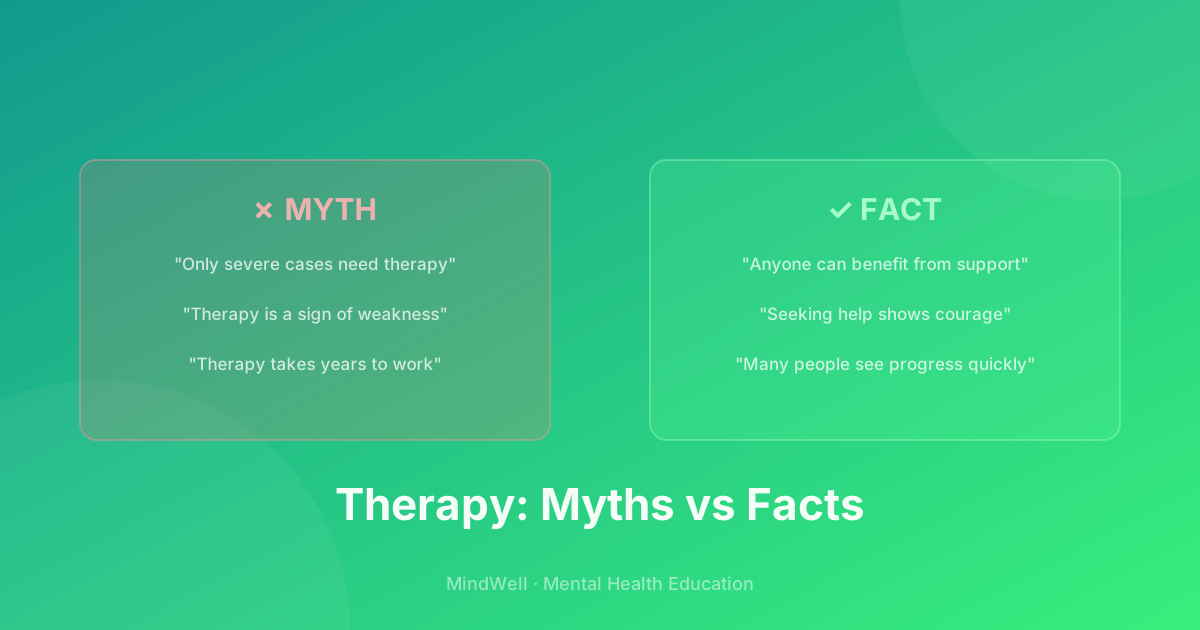
Myth 1: "Therapy is only for people with severe mental illness"
Fact: Therapy is appropriate for a wide range of experiences, from everyday stress and life transitions to grief, relationship difficulties, low self-esteem, and work-related burnout — as well as clinical conditions.
You do not need to be in crisis or have a formal diagnosis to benefit. Many people find therapy valuable as a space for self-reflection and personal development, even when not experiencing significant distress.
Myth 2: "Seeking therapy means you're weak or cannot handle your problems"
Fact: Seeking therapy is a decision to actively invest in your mental health — and it takes courage. It means recognising that we all have limits and that specialised support can help us grow beyond them.
Therapists, doctors, and mental health professionals themselves often engage in their own therapy. It is a professional tool for learning, not a sign of inadequacy.
Myth 3: "Therapy takes years and years"
Fact: Many therapeutic approaches are time-limited by design. CBT for anxiety or depression, for example, often runs for 6–20 sessions. Brief solution-focused therapy can be effective in even fewer.
Some people do engage in longer-term therapy — particularly for complex trauma or personality-related difficulties — but this is not the universal experience. Your therapist should discuss what kind of timeline is realistic for your situation.
Myth 4: "Therapists just tell you what to do or give advice"
Fact: Most therapists do not give direct advice. Instead, they help you understand your own patterns, explore your feelings and thoughts, develop skills, and work toward your own goals.
Different approaches work differently — CBT involves collaborative skill-building, psychodynamic therapy explores patterns from the past, DBT teaches specific emotion regulation skills — but all are guided by the client's goals, not the therapist's opinions.
Myth 5: "Talking about problems only makes them worse"
Fact: There is extensive evidence that processing experiences through talk — especially in a safe, non-judgmental therapeutic relationship — can reduce distress rather than amplify it.
Emotion suppression, by contrast, tends to increase the intensity of difficult feelings and maintain psychological problems over time. The act of articulating and contextualising experiences has measurable effects on neural and psychological functioning.
Myth 6: "Therapy is too expensive / not available here"
Fact: Access to mental health support varies significantly by location. In Bangladesh, options are growing:
- Public hospitals in major cities have psychiatric services
- NGOs and community organisations provide low-cost counselling
- Teletherapy/online therapy has expanded access meaningfully
- MindWell's request a session page can help connect you to support
Cost is a genuine barrier for many — we acknowledge this honestly. But the perception that therapy is completely inaccessible is often not accurate.
Myth 7: "If therapy doesn't work immediately, it will never work"
Fact: Therapeutic progress is rarely linear. It can take a few sessions to build rapport and establish goals, and some approaches (like exposure therapy for anxiety) involve temporary discomfort before improvement. Research consistently shows that outcomes improve with sustained engagement.
If one therapist or approach doesn't feel right, it is legitimate to try another. The therapeutic relationship itself is one of the strongest predictors of outcome — finding a therapist you trust matters.
Myth 8: "Medication is better than therapy"
Fact: For many conditions, the evidence supports combining therapy and medication where both are indicated. For some conditions (e.g. mild-to-moderate depression, most anxiety disorders), therapy alone can be as effective as medication — and produces more durable change because skills are learned, not just symptoms suppressed.
The best approach depends on the individual, the severity, and the available options. A GP, psychiatrist, or psychologist can help you make an informed decision.
Summary
Therapy is an evidence-based tool available to a wide range of people — not just those in severe crisis. Stigma and misinformation reduce access to something that can genuinely help. If you've been considering therapy, the information above should help you make a more informed decision.
MindWell's psychologists directory and request a session page can support you in taking the next step.
*Disclaimer: This article provides general educational information and is not a substitute for professional assessment or treatment recommendations.*